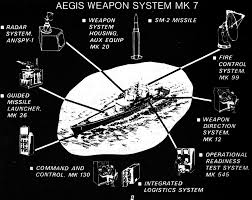
I spent my early career writing A-Level specifications for the Aegis Combat and Weapons System. In that world, a “glitch” isn’t a nuisance; it’s a catastrophic failure. When I moved into the world of off-grid infrastructure and prepping, I realized most people were building systems destined to fail because they lacked a cohesive architectural philosophy.
At the Logic Lab, we apply three core military-engineering lessons to every solar array, water pump, and communication mesh we design.
Pillar 1: Active Redundancy (N+1 Logic)
In the Aegis environment, we never rely on a single sensor or power source. We use N+1 Redundancy—the requirement that a system has at least one more component than is necessary for operation.
The Off-Grid Application: If your “whole-house” power relies on a single massive inverter, you have a Single Point of Failure. I teach you how to architect modular systems where the failure of one component doesn’t lead to a total “Black Start” scenario.
Pillar 2: Signal-to-Noise Ratio (Data Integrity)
Telecommunications and weapons systems rely on clear data. “Noise” (interference) leads to bad decisions.
The Off-Grid Application: Most preppers are drowning in “noise”—marketing hype, unverified YouTube “hacks,” and cheap components with “hallucinated” specs. We filter that out. Our guides are built on raw data, verified schematics, and the Signal of what actually works when the grid goes dark.
Aegis systems are designed to operate in the most hostile environments on earth. This requires Hardening—protecting the “logic” of the system from external shocks, whether they are electromagnetic, thermal, or physical.
The Off-Grid Application: I don’t just show you how to wire a battery; I show you how to protect it. From EMP mitigation for your solar controller to Thermal Management for your LiFePO4 bank, we design for the “Worst Day,” not the “Average Day.”
For those outside the defense industry, Aegis is the world’s premier integrated naval combat system. It’s designed to track hundreds of threats simultaneously and coordinate a response in seconds.
My time writing “A-Level” specifications for Aegis taught me one thing: Reliability is designed, not accidental. I bring that same level of architectural rigor to every DIY project on this site.
Pillar 4: Financial Integrity (The “Zero-Error” Ledger)
The Experience: Writing the first billing systems for wrap fee managed investment accounts. The Prepper Mapping: Data Sovereignty & Resource Accounting.
The Logic: “In the financial world, a single rounding error or a dropped packet isn’t just a glitch—it’s a legal and systemic crisis. I apply this Zero-Error Logic to your resource management.”
The Application: Most preppers “guess” how much fuel, water, or battery capacity they have. I teach you how to build “Resource Ledgers” so you know exactly what you have, down to the last watt-hour. If your math is “fuzzy,” your survival plan is a guess.
Pillar 5: Connectivity Resilience (The Mesh Logic)
The Experience: Architecting enterprise-wide WiFi, VoIP, and cellular billing interfaces.
The Prepper Mapping: The “Last Mile” Communications. The Logic: “I’ve built systems that handle millions of simultaneous calls and data handoffs. I know exactly where the ‘choke points’ are in a cellular or internet grid.”
The Application: When the towers go dark, your “Logic” shouldn’t. I apply Network Topology principles to help you build local, off-grid communication meshes. We don’t just “buy a radio”; we architect a communication plan that works when the switches are flipped.
The Logic Lab: System Audit Checklist (The “Defense-Grade” Standard)
This checklist is based on the A-Level Specifications used in military systems architecture. If you can’t check every box, your infrastructure has a “Logic Gap.”
1. Redundancy (N+1 Analysis)
[ ] Critical Load Backup: If your primary inverter fails today, do you have a secondary (even if smaller) 12V or 24V “Life Support” circuit for lights and comms?
[ ] Tooling Redundancy: Do you have the manual equivalent for every powered “Necessity” (e.g., a hand pump for your well, a manual transfer switch for your generator)?
[ ] Fuel Diversity: Can you cook/heat using at least three distinct energy sources (Solar, Propane, Wood/Biomass)?
2. Data Integrity (Signal-to-Noise)
[ ] Monitoring: Do you have a battery shunt that provides real-time “State of Charge” (SOC), or are you guessing based on fluctuating voltage?
[ ] Documentation: Is there a physical, printed schematic of your wiring logic inside your battery box or EMP shield?
[ ] Sensor Verification: Are your thermal sensors placed on the battery terminals (the “Point of Failure”) or just in the general room?
3. Hardening (Environmental Survivability)
[ ] Thermal Management: Is your LiFePO4 bank insulated and heated? (LiFePO4 cannot be charged below 0 degrees celcius without permanent cell damage).
[ ] Over-Current Protection: Is every single positive lead fused within 7 inches of the power source?
[ ] EMI/EMP Mitigation: Are your spare charge controllers and comms (radios) stored in a verified Faraday environment (Nested Shielding)?
Select the level of prepper you want more information about:
Owen is a systems engineer and the founder of LogicPrepper.com, a technical resource dedicated to infrastructure reliability and off-grid design. With a professional background including writing A-level specifications for the Aegis Weapons System, he specializes in translating complex engineering principles into actionable DIY blueprints for the preparedness community. When he isn’t stress-testing solar arrays or auditing water filtration topologies, he’s usually in his “Logic Lab” building redundant 3D-printed hardware solutions.